
How Long to Pay Off a Credit Card in 2026? Calculator + Avalanche vs Snowball
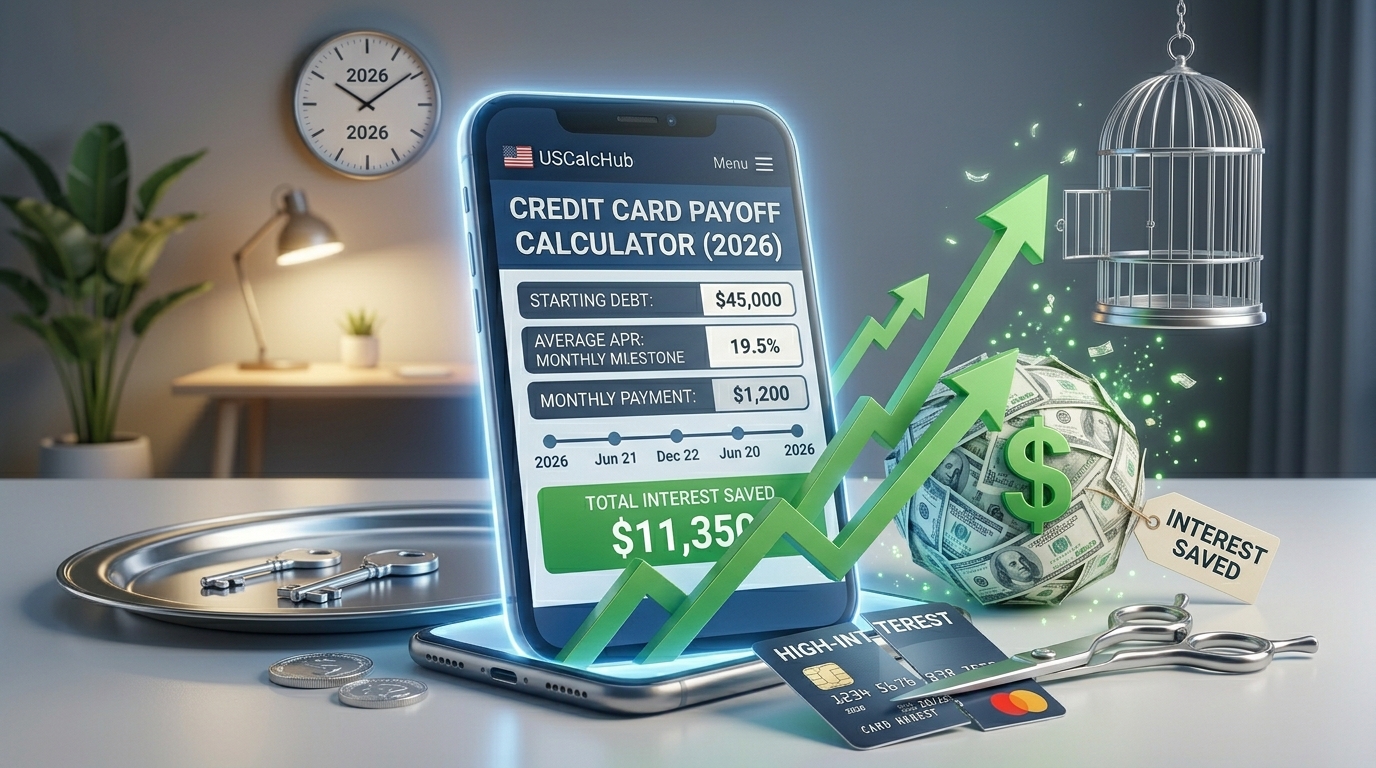
Credit card debt has reached an all-time high in 2026, and with average Annual Percentage Rates (APRs) hovering between 22% and 24%, millions of Americans are desperately asking: how to pay off debt in 2026? When you rely on minimum payments, compounding interest turns a small shopping spree into a decade-long financial burden. If you are tired of watching your hard-earned money vanish into bank fees, it is time to take control. Using a reliable how long to pay off credit card calculator 2026 is the first critical step to finding your exact “debt-free date” and escaping the revolving debt trap.
Your Real Payoff Timeline (Why Minimum Payments Are a Trap)
The minimum payment on your credit card statement is not designed to help you. It is mathematically calculated by banks to maximize their profits by keeping you in debt for as long as legally possible. Typically, a minimum payment is set to just 1% to 3% of your total balance, plus the monthly interest charge. This means that nearly all of your monthly payment goes directly toward paying the interest, while your actual principal balance barely shrinks.
For example, if you have a $5,000 balance at a 24% APR and only make a 3% minimum payment (around $150), it will take you years to pay it off, and you will end up paying thousands of dollars in pure interest. The Federal Reserve strongly advises consumers to pay more than the minimum to avoid long-term financial distress. To escape this, you must build a strategy. If you need to find extra cash in your monthly budget to put toward your debt, we highly recommend running your numbers through our Free Salary Calculator to see exactly where your net pay is going.
Ready to Find Your Exact Debt-Free Date?
Stop guessing. Enter your current credit card balance, your APR, and your planned monthly payment below to see exactly how many months it will take to become debt-free.
Open Full Payoff CalculatorAvalanche vs Snowball — Which Saves More Interest?
Once you know how long your payoff timeline is, you need a strategy to accelerate it. In 2026, the two most effective and widely debated strategies are the Debt Avalanche and the Debt Snowball methods.
- The Debt Avalanche (Saves the Most Money): This method focuses on mathematics. You list all your credit cards and focus all your extra cash on the card with the highest APR (interest rate), while making minimum payments on the rest. This strategy guarantees you will pay the absolute lowest amount of interest over time.
- The Debt Snowball (Builds Momentum): This method focuses on psychology. You target your card with the smallest balance first, regardless of the interest rate. Once that small card is paid off, you take that monthly payment and “snowball” it into the next smallest balance. It provides quick emotional wins that keep you motivated.
| Monthly Payment Strategy ($5,000 Balance at 24% APR) | Time to Pay Off | Total Interest Paid |
|---|---|---|
| Minimum Only (~$150/mo) | 59 Months (~5 Years) | $3,840 |
| Minimum + $50 ($200/mo) | 36 Months (3 Years) | $2,095 |
| Aggressive ($300/mo) | 21 Months (< 2 Years) | $1,080 |
Frequently Asked Questions (FAQs)
1. How to figure out how long it will take to pay off a credit card?
To figure out your exact payoff timeline, you must use a credit card payoff calculator. You need three pieces of information: your current total balance, your card’s Annual Percentage Rate (APR), and your fixed monthly payment amount. The calculator uses an amortization formula to tell you exactly how many months it will take.
2. How to pay off debt in 2026?
The most effective way to pay off debt in 2026 is to halt all new credit card spending, create a strict zero-based budget, and apply the Debt Avalanche method (targeting highest APR cards first) or utilize a 0% APR balance transfer card to pause compounding interest while you aggressively pay down the principal.
3. What is the 2 3 4 rule for credit cards?
The 2/3/4 rule is an underwriting guideline used by certain major banks for credit card approvals, especially for balance transfers. It states that you generally will not be approved if you have opened 2 new cards in the last 2 months, 3 cards in the last 12 months, or 4 cards in the last 24 months.
4. What is the 2 2 2 rule for credit cards?
In personal finance, the 2-2-2 rule for credit cards is a strategic payment method to build credit and avoid interest traps: keep a maximum of 2 active credit cards, maintain your credit utilization strictly under 20%, and pay your balance 2 times a month (half before the statement closes, and the rest before the due date).
The Verdict for 2026
Breaking free from credit card debt in 2026 requires more than just good intentions; it requires ruthless mathematics. The minimum payment trap is designed to keep you poor, but by adding just a few extra dollars a month and utilizing the Debt Avalanche strategy, you can reclaim your financial freedom. Do not wait for interest rates to drop. Use the USCalcHub calculators today to map out your aggressive payoff plan, optimize your paycheck, and finally crush your debt for good.
Author Bio: Muzaffar Ali is a financial writer at USCalcHub, dedicated to building intuitive tax and debt calculators that help Americans reclaim their financial independence.
Disclaimer: This article is for informational purposes only and does not constitute professional financial or tax advice. Please consult a certified professional before making major financial decisions.
Authority Source: Consumer Financial Protection Bureau (CFPB) Guidelines